How a Stinky Bowl of Noodles Conquered China
Don't Hold Your Nose (Yet): The “Stinky” Reputation
I still remember the first time an American friend lifted the lid off a takeout container of luosifen. He recoiled like he'd been hit by something invisible. “What… is that smell?” he asked, somewhere between horrified and fascinated.
That smell is the signature of luosifen: the funk from fermented bamboo shoots (suān sǔn). To be fair, it isn't spoiled—it's lactic-acid bacteria doing their job on the bamboo. “Smells funky, tastes amazing” (闻着臭、吃着香) is the whole philosophy of this bowl in eight characters.
If you think that's weird, consider: Southeast Asians guard their durian like treasure, Europeans pair blue cheese with wine, Japanese eat sticky natto for breakfast, and Swedes went full send with surströmming, a fermented-herring dish that's basically a biological weapon. Funky fermented food is universal. This bowl from Liuzhou is just one more member of the club—treating it as a curiosity undersells it.
What's Actually in the Bowl: Deconstructing the “Dark Cuisine”
The ingredient list reads like a flavor map:
- River-snail and pork-bone broth — the umami base of the whole bowl.
- Fermented bamboo shoots — the lactic-acid-fermented star that delivers the signature funk and sourness.
- Fried tofu skin — soaks up the broth, bursts with juice on the first bite.
- Peanuts for the crunch; wood ear and daylily for the chew.
- A ladle of chili oil on top, to anchor everything with heat.
Here's the key point: the funk comes from fermentation, not rotten ingredients. The bacteria convert sugars in the bamboo into lactic acid—pungent to smell, but appetite-opening to eat. It's not that exotic a concept. If you like fish with pickled cabbage (酸菜鱼, suāncài yú) or German sauerkraut, you're already halfway to loving luosifen. The bowl just takes the idea further, and more honestly.
Liuzhou: A City That Builds Cars—and a Bowl of Noodles
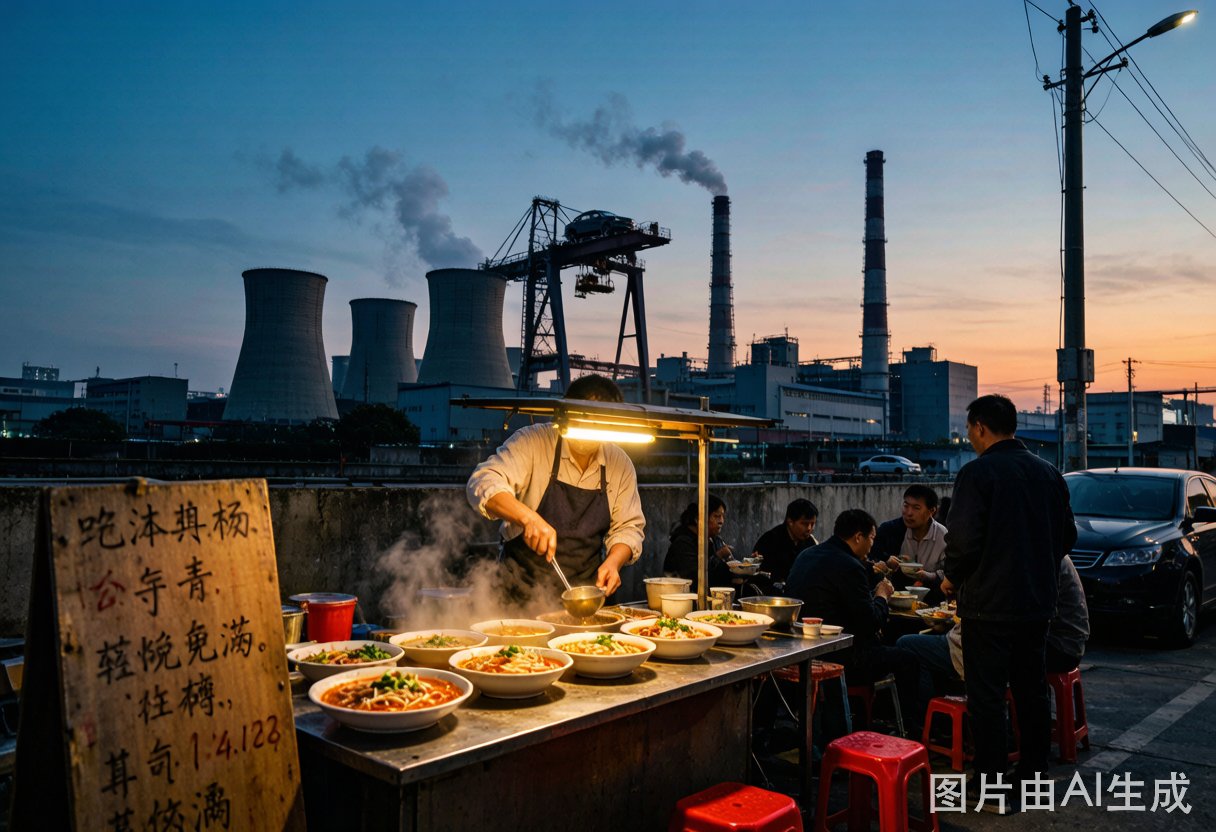
Liuzhou is a bit of a contradiction. It's a heavy industrial hub in southwest China, home base of SAIC-GM-Wuling, a city full of people who build cars. Yet this hard-edged place gave birth to the softest, most addictive bowl of noodles in the country.
As a proper snack, luosifen probably appeared in the night markets of the 1970s and 80s—off-shift factory workers and students grabbing a cheap, filling bowl by the roadside. But the snail-eating tradition goes back much further: excavations at the Bailiandong (白莲洞) site show locals were eating snails roughly 20,000 years ago.
By 2025, Liuzhou went all in and staged a “10,000-people-slurping-together” event, setting a Guinness World Record. A bowl of noodles had become the city's ID card.
From Night Market to Assembly Line: The Industrialization Revolution
What really blew luosifen up was prepackaged technology. Before, you had to eat it fresh near Liuzhou or it lost its soul. Now vacuum-sealing and standardized sauce packets lock the broth, noodles, and bamboo shoots into a cardboard box—shippable, storable, flavor-stable.
Add the e-commerce tailwind—Douyin live-streaming sales, Pinduoduo's reach into smaller cities, hosts slurping on camera—and the bowl marched out of Guangxi to the whole country. The numbers are blunt: in 2024 the full luosifen industry chain in Liuzhou hit 75.96 billion RMB, up 13.4% year on year; by 2025 it reached 81.31 billion (16.3b prepackaged, 43.4b physical stores, 21.61b derivatives and supplies), per a Liuzhou government release dated Feb 5, 2026. The “Liuzhou Luosifen” brand alone was valued at 15.051 billion RMB in 2025.
And yes—during the pandemic, stuck-at-home slurping became cheap comfort, demand spiked, and that poured fuel on the fire.
Gen Z and the “Slurping” Subculture: When a Bowl Becomes Social Currency
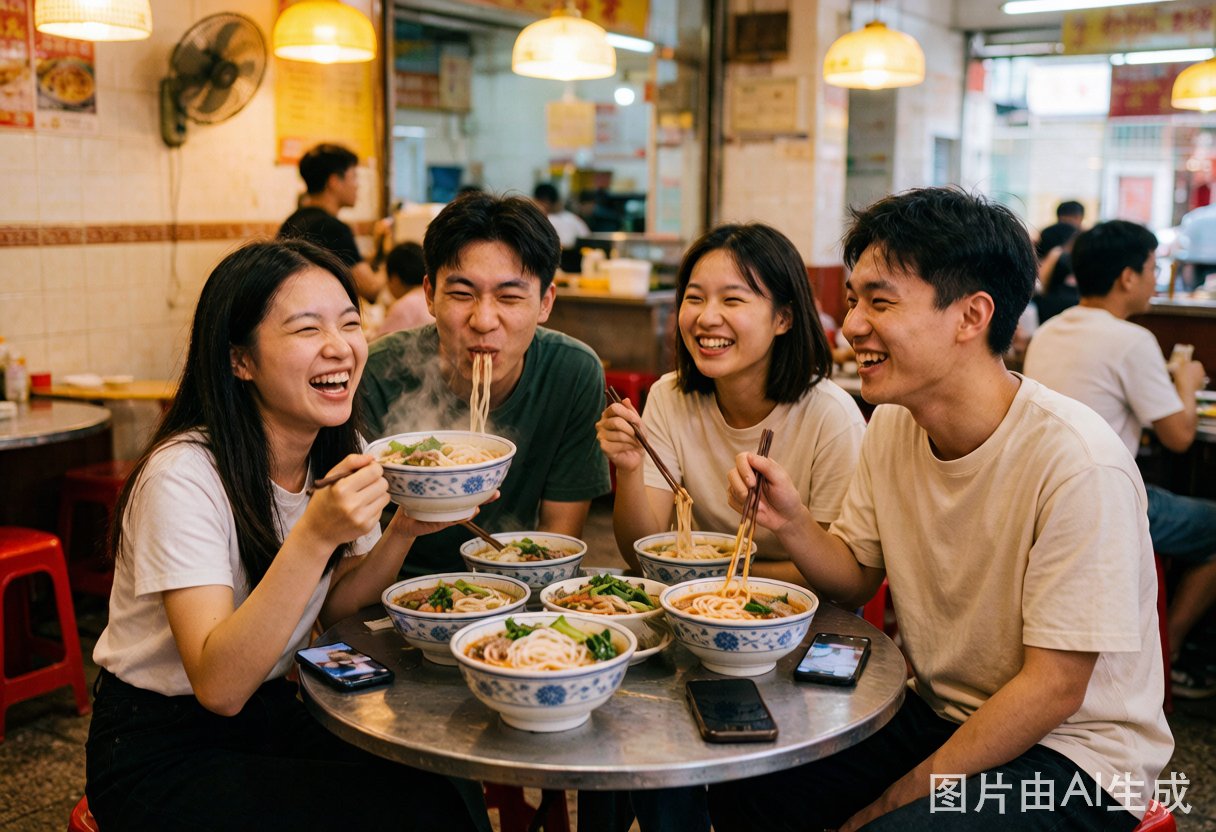
In Gen Z's hands, luosifen stopped being just a bowl—it became a meme. People livestream themselves feeding it to foreign friends, “challenge” hashtags blow up on Douyin and Bilibili, and stickers are everywhere. There are novelty collabs like luosifen milk tea and luosifen cake, even flavor blind boxes.
The best part is the social angle. Post a photo on WeChat Moments with the caption “dare you eat this,” and the comments fill with “brave soul” and “send me the address.” A controversial bowl is natural social currency—whether you'll cross that smell threshold becomes a quiet test among friends.
Going Global: When Liuzhou Meets the World
The funk has crossed borders too. According to a Qstheory.cn report from August 2023, 54 Liuzhou companies now export luosifen to the US, Canada, Australia, Singapore, and Malaysia. In a Chinese supermarket in New York, or on Amazon, you can grab a box.
Two forces drive it: overseas Chinese nostalgia—the further from home, the more you miss that bamboo-shoot funk—and local curiosity, following the same path Westerners took with durian and natto. Cross-border e-commerce plus pandemic stockpiling parked the bowl firmly on world shelves.
A Bowl That Mirrors a Real China
Luosifen is really an intersection point. Urbanization (night market to assembly line), industrialization (the prepackaged revolution), youth culture (the meme economy), and globalization (going abroad) all meet in one bowl.
So here's my advice: cross the smell threshold the way you'd cross your first impression of China. You think it's punchy, strange, something that makes you wrinkle your nose—but step over, and it usually turns sweet. The most interesting parts of China are often hiding in the places that make you wrinkle your nose at first.